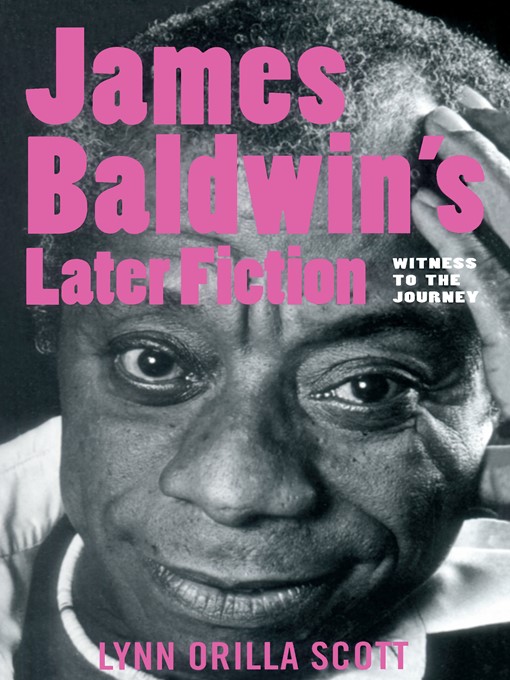
James Baldwin's Later Fiction examines the decline of Baldwin's reputation after the middle 1960s, his tepid reception in mainstream and academic venues, and the ways in which critics have often mis-represented and undervalued his work. Scott develops readings of Tell Me How Long the Train's Been Gone, If Beale Street Could Talk, and Just Above My Head that explore the interconnected themes in Baldwin's work: the role of the family in sustaining the arts, the price of success in American society, and the struggle of black artists to change the ways that race, sex, and masculinity are represented in American culture.
Scott argues that Baldwin's later writing crosses the cultural divide between the 1950s and 1960s in response to the civil rights and black power movements. Baldwin's earlier works, his political activism and sexual politics, and traditions of African American autobiography and fiction all play prominent roles in Scott's analysis.
- Available now
- New eBook additions
- New kids additions
- New teen additions
- Most popular
- Try something different
- See all ebooks collections
- Available now
- New audiobook additions
- New kids additions
- New teen additions
- Most popular
- Try something different
- See all audiobooks collections
- Green Mountain Book Award, 2025-2026
- Golden Dome Book Award 2025-2026
- Golden Dome Book Award 2024-2025
- Red Clover Book Award, 2025-2026
- The Red Clover Book Award 2024-2025
- Green Mountain Book Award 2024-2025
- Green Mountain Book Award 2023-2024
- Vermont Golden Dome Book Award 2023-2024
- Red Clover Book Award 2023-2024
- Vermont Golden Dome Book Award Master List 2022-2023
- Green Mountain Book Award 2022-2023
- Green Mountain Book Award 2021-2022
- Vermont Golden Dome Book Award Master List 2021-2022
- See all awards collections